
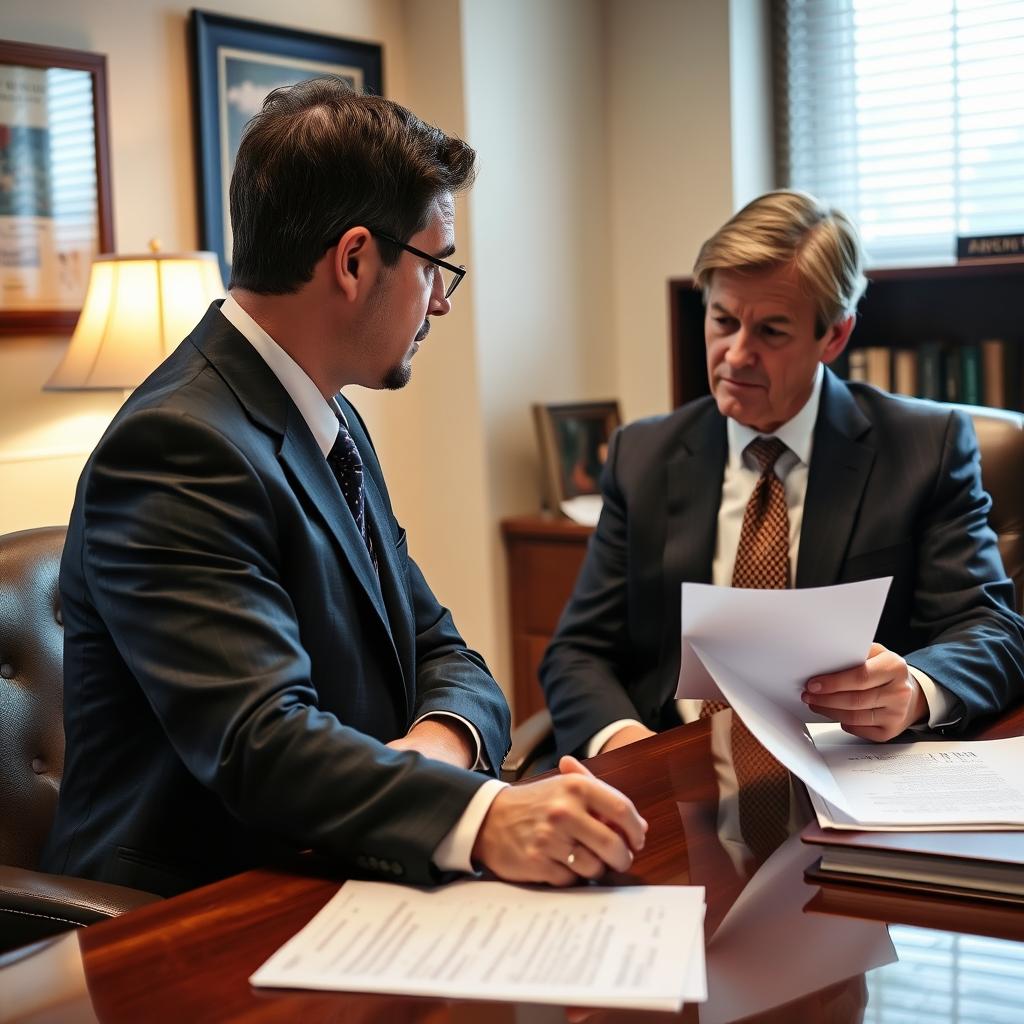
Obstruction Defense Lawyer Botetourt County, VA
You were pulled over on Route 220 near Daleville, and what began as a routine traffic stop escalated quickly. Words were exchanged, you questioned the officer’s actions, and now you face a charge that goes beyond a traffic ticket—obstruction of justice under Virginia Code § 18.2‑460. The charge can be a Class 1 misdemeanor or, in some circumstances, a Class 5 felony. If you have been charged with obstruction in Botetourt County, the matter will be heard at the Botetourt County General District Court on Back Street in Fincastle, or, for felony cases, at the Botetourt County Circuit Court. Law Offices Of SRIS, P.C. represents individuals facing obstruction charges throughout Botetourt County, including Fincastle, Daleville, Troutville, Blue Ridge, and Eagle Rock. Mr. Sris, a former prosecutor, and his Of Counsel team—which includes a former Virginia State Trooper—bring decades of combined courtroom and law-enforcement insight, backed by over 4,739 documented firm-wide results, to every case. To request a consultation, reach Law Offices Of SRIS, P.C. at (888) 437-7747. Law Offices Of SRIS, P.C. – Advocacy Without Borders.
Understanding Obstruction Charges in Botetourt County
Obstruction of justice in Virginia is governed by Va. Code § 18.2‑460. The statute makes it unlawful to knowingly obstruct a judge, magistrate, juror, attorney for the Commonwealth, witness, law-enforcement officer, or other officer of the court in the performance of their duties. A conviction under subsection (A) is a Class 1 misdemeanor, punishable by up to 12 months in jail and a fine of up to $2,500. When the obstruction involves threats of bodily harm, force, or the impersonation of law enforcement, the charge rises to a Class 5 felony, which carries a potential sentence of one to ten years—or, at the jury’s discretion, up to 12 months in jail and a fine.
Botetourt County prosecutes obstruction cases in two courts. Misdemeanor obstruction charges are tried in the Botetourt County General District Court, located at 20 E. Back Street, Suite A, Fincastle, Virginia 24090. The General District Court also conducts preliminary hearings for felony obstruction charges. Felony trials are held in the Botetourt County Circuit Court. The Commonwealth’s Attorney for Botetourt County prosecutes these matters. Understanding the courtroom where your case will be heard is essential, because the procedural expectations and the options available—such as the right to a jury trial in Circuit Court—differ between the two courts.
Because an obstruction charge often arises from a confrontation with law enforcement, the facts are frequently disputed. A conviction can result in incarceration, fines, and a permanent criminal record that affects employment, housing, and professional licensing. Plea bargaining is permitted under Rule 3A:8 of the Rules of the Supreme Court of Virginia; the Commonwealth’s Attorney and defense counsel may negotiate a plea agreement, which the court may accept or reject. An experienced defense lawyer can evaluate whether a motion to suppress evidence, a challenge to the officer’s observations, or negotiation toward a reduced charge is appropriate.
How Mr. Sris and His Of Counsel Handle Obstruction Defense
Mr. Sris, a former prosecutor, and his Of Counsel team—which includes a former Virginia State Trooper—approach every obstruction case with an understanding of both sides of the courtroom. The former trooper’s first-hand knowledge of police procedures, investigative techniques, and enforcement tactics provides the ability to identify procedural weaknesses in the state’s case. That insight is combined with Mr. Sris’s prosecutorial experience, which informs how the Commonwealth’s Attorney is likely to construct its case.
Representation begins with a detailed review of the incident: the police report, any body‑camera or dash‑camera footage, witness statements, and the specific language of the charge. Mr. Sris and his Of Counsel examine whether the officer’s commands were lawful, whether the defendant’s conduct amounted to active obstruction rather than mere speech, and whether any constitutional protections apply. From there, the team develops a strategy that may include filing pretrial motions, engaging in discussions with the prosecutor, or preparing for trial. Throughout the process, Mr. Sris and his Of Counsel appear in the Botetourt County General District Court or Circuit Court as appropriate, ensuring that the client’s rights are protected at every stage—from arraignment through any trial or appeal.
About Mr. Sris and His Of Counsel Team
Mr. Sris is the Owner and Founder of Law Offices Of SRIS, P.C. A former prosecutor, he founded the firm in 1997 and is admitted to practice in Virginia, Maryland, the District of Columbia, New Jersey, and New York. Mr. Sris testified before the Virginia House Courts of Justice Committee in support of 2019 HB 635 (chief patron Del. David Bulova). His Of Counsel team includes attorneys with extensive criminal‑defense and law‑enforcement backgrounds, including a former Virginia State Trooper who served 15 years conducting criminal and traffic investigations across the Commonwealth. Together, Mr. Sris and his Of Counsel bring over 120 years of combined legal experience and have achieved over 4,739 documented firm-wide results. Results may vary.
Frequently Asked Questions
What is obstruction of justice under Virginia law?
Obstruction of justice occurs when a person knowingly impedes a law-enforcement officer, judge, or other court officer in the performance of their duties. Virginia Code § 18.2‑460 criminalizes conduct such as physically interfering with an arrest, providing false identification, or threatening an officer. A simple obstruction—such as refusing to comply with a lawful order without physical force—is a Class 1 misdemeanor, while obstruction accompanied by threats or impersonation of a law‑enforcement officer is a Class 5 felony. The statute covers a wide range of behavior, and the specific allegations in your case determine how the charge is classified and prosecuted in Botetourt County.
What are the penalties for an obstruction conviction in Botetourt County?
A Class 1 misdemeanor obstruction conviction carries up to 12 months in jail and a fine of up to $2,500; a Class 5 felony obstruction conviction can result in one to ten years of imprisonment, or up to 12 months in jail and a fine at the jury’s discretion. The court also has the authority to impose supervised probation and other conditions. A conviction creates a permanent criminal record. For felony obstruction, collateral consequences include the loss of firearm rights and voting restrictions. The specific penalty in any case depends on the facts, the defendant’s criminal history, and the arguments presented at sentencing. An experienced attorney can work to mitigate the consequences by challenging the charge or negotiating an amendment to a lesser offense.
Do I need a lawyer for an obstruction charge in Botetourt County?
Yes, because an obstruction conviction—even a misdemeanor—can result in jail time, fines, and a lasting criminal record that affects employment, housing, and professional licenses. An attorney can evaluate the strength of the state’s evidence, identify procedural or constitutional defenses, and negotiate with the Commonwealth’s Attorney. In Botetourt County, misdemeanor obstruction cases are heard in General District Court, where judges handle a significant volume of cases; having counsel who understands the local courtroom practices can make a meaningful difference. For felony obstruction, representation is critical because the potential penalties are substantially higher and the case proceeds in Circuit Court with full discovery and jury‑trial rights.
How can an obstruction charge be defended?
Defense strategies for obstruction of justice in Virginia may include challenging whether the officer’s order was lawful, arguing that the defendant’s conduct was protected speech rather than obstruction, or demonstrating a lack of intent to impede. A former Virginia State Trooper on the Of Counsel team brings knowledge of police procedures that can uncover investigative or procedural errors. Additionally, video evidence—from body cameras, dash cameras, or surveillance footage—can be pivotal in showing what actually occurred. If the evidence supports it, the attorney may file a motion to suppress or negotiate with the prosecutor for a reduced charge, such as an amendment to a non‑criminal infraction or a diversionary disposition where available.
What should I do if I am arrested for obstruction in Botetourt County?
Remain calm, do not resist, and exercise your right to remain silent beyond providing basic identification. Do not discuss the incident with anyone except your attorney. Preserve any evidence that may be relevant, such as video recordings, photographs, or witness contact information. Contact an experienced criminal‑defense attorney as soon as possible. The timeline from arrest to arraignment in Botetourt County can move quickly, and early intervention allows your lawyer to address bond conditions, gather evidence, and begin building a defense before the first court appearance.
How does the Botetourt County court process work for a misdemeanor obstruction case?
A misdemeanor obstruction charge begins with an arrest or summons, followed by an arraignment in the Botetourt County General District Court, where the defendant enters a plea and the court sets a trial date. At trial, the Commonwealth’s Attorney presents evidence, and the defense has the opportunity to cross‑examine witnesses, present its own evidence, and argue for acquittal or a reduced finding. If the defendant is convicted, the judge imposes a sentence. A defendant has the right to appeal a General District Court conviction to the Botetourt County Circuit Court, where the case is heard de novo—meaning the Circuit Court conducts a brand‑new trial.
What is the difference between General District Court and Circuit Court for obstruction cases?
The General District Court handles misdemeanor obstruction trials and felony preliminary hearings, while the Circuit Court handles felony obstruction trials and appeals from the General District Court. In General District Court, cases are decided by a judge without a jury. Appeals from that court to the Circuit Court result in a new trial, where the defendant has the right to a jury. A felony obstruction charge will start with a preliminary hearing in General District Court; if the judge finds probable cause, the case is certified to the Circuit Court for trial. Understanding this two‑tier process is important when evaluating how to proceed with a defense.
Can an obstruction charge be dropped or reduced?
Yes, an obstruction charge may be dropped if the evidence is insufficient, or it may be reduced through negotiations with the Commonwealth’s Attorney. For example, a felony obstruction charge could be amended to a misdemeanor, or a misdemeanor could be amended to a lesser offense, such as disorderly conduct, depending on the facts. The prosecutor’s willingness to amend charges often depends on the strength of the evidence, the defendant’s background, and the arguments presented by defense counsel. An attorney can present mitigating factors and legal challenges that may persuade the prosecutor to offer a favorable resolution.
How does Mr. Sris’s former prosecutor background help in an obstruction case?
A former prosecutor understands how the Commonwealth’s Attorney evaluates evidence, decides whether to pursue charges, and negotiates resolutions. Mr. Sris, the Owner and Founder of Law Offices Of SRIS, P.C., draws on his prosecutorial experience to anticipate the state’s strategy and identify weaknesses in its case. That perspective is particularly valuable in obstruction cases, which often hinge on officer testimony and the subjective interpretation of events. Combined with the law‑enforcement insight of the former Virginia State Trooper on the Of Counsel team, the firm approaches each obstruction matter with a comprehensive understanding of both sides of the courtroom.
Is a Virginia obstruction charge a criminal offense or a traffic infraction?
An obstruction charge under Va. Code § 18.2‑460 is a criminal offense, not a traffic infraction. Even when it arises from a traffic stop, the charge is prosecuted in criminal court and carries the possibility of jail time and a criminal record. Many people mistakenly believe that because the encounter began as a traffic stop, the resulting charge is a minor traffic matter. In fact, a conviction for obstruction of justice is a permanent criminal entry that can appear on background checks. It is important to treat the charge with the seriousness of any other criminal allegation.
What role does video evidence play in an obstruction defense?
Video evidence—from body‑worn cameras, patrol‑car dash cameras, or bystander cell‑phone recordings—can be critical in an obstruction defense because it provides an objective record of the encounter. The former Virginia State Trooper on the Of Counsel team knows what to look for in police recordings, including whether the officer followed department procedures and whether the defendant’s actions constitute obstruction or merely verbal disagreement. When video contradicts an officer’s account, it can form the basis for a motion to dismiss or a strong argument at trial. Preserving and obtaining this footage early is a priority in building the defense.
How do I reach Law Offices Of SRIS, P.C. about an obstruction case in Botetourt County?
Call (888) 437-7747 to request a consultation about an obstruction charge in Botetourt County. The firm serves clients throughout the county, including Fincastle, Daleville, Troutville, Blue Ridge, and Eagle Rock. Mr. Sris and his Of Counsel team appear in the Botetourt County General District Court and Circuit Court. Consultations are by appointment. Phones are answered 24 hours a day, seven days a week.
Additional Virginia criminal defense resources:
Fairfax County criminal defense ·
Fairfax City criminal defense ·
Falls Church criminal defense ·
Prince William County criminal defense ·
Manassas criminal defense
Primary legal authorities: Virginia Code § 18.2‑460 · Botetourt County General District Court · Virginia’s Judicial System
Attorney advertising. Prior results do not guarantee a similar outcome. Results may vary.
Case results depend on a variety of factors unique to each case.